Smart cooking chatbot
A smart cooking chatbot is a digital assistant that helps you learn about food, learn about cooking methods, plan meals, and solve common kitchen problems faster. The tool uses artificial intelligence to answer your questions and can tailor its suggestions based on your ingredients, skill level, and dietary needs. But can you really trust a smart assistant to teach you how to cook? Let’s take a look at what this technology can do and how you can use it in the kitchen.
What is a smart cooking chatbot and how does it work?
Imagine coming home after a long day at work, with a few eggs, some vegetables, and some rice in the fridge, and not knowing what to make. Instead of searching through dozens of web pages, you can ask an intelligent cooking chatbot to come up with some suggestions based on those ingredients.
This tool is a type of AI-based assistant that receives your requests in natural language and responds based on the information it has learned, instructions, and available capabilities. Some tools also provide image retrieval, web search, or voice interaction in addition to text chat.
The important thing to note is that not all chatbots have the same capabilities. One tool may only answer text-based questions, while another can scan food images or find new information from online sources.
What is the difference between a cooking chatbot and a regular search?
In traditional search, you enter a phrase like “potato and egg dish” and get a list of relevant pages. Then you have to open a few pages, compare the ingredients, and find the right option.
But a smart cooking chatbot can respond to a more specific request. For example, you could say:
"I have two potatoes, an egg, and some cheese. Suggest a simple meal for one person that doesn't require an oven. If the preparation time is long, suggest another option."
In this case, the tool will try to take your limitations into account and tailor the answer based on a few conditions. You can also continue the conversation by asking questions about alternative ingredients, food preservation methods, or why a food's texture has deteriorated.
However, a conversational answer doesn't always mean the right answer. AI may suggest the wrong amount of ingredients or provide inaccurate information about a cooking method. So, especially on food safety-related topics, you should check answers with reputable sources.

The most important uses of smart cooking chatbots at home
The application of this technology is not limited to food recommendations. The right assistant can help you in various aspects of planning, shopping, learning and kitchen management.
1. Suggest food with available ingredients
One of the coolest uses of this tool is to suggest meals based on ingredients you have at home. Simply write a list of ingredients and explain your limitations.
For example, if you have some cooked chicken, mushrooms, bell peppers, and bread, you can ask the chatbot to suggest a few different options. Then ask about approximate preparation times, tools needed, or substitutions for a specific ingredient.
This method will help you make better use of existing ingredients before buying new ones. Of course, to reduce food waste, it is also a good idea to check the expiration date and storage conditions of the ingredients; good appearance alone does not guarantee that a food is healthy.
2. Substituting raw materials
Sometimes when preparing a meal, you realize you don't have one of the ingredients you need. The chatbot can suggest possible substitutes, but it should also explain how the ingredients work differently.
For example, replacing yogurt with milk in some recipes may change the texture and moisture content. Substituting different flours can also affect the consistency of the dough.
To get a better answer, instead of asking, "What can I substitute for yogurt?", write, "I don't have yogurt in a simple cake. What would be a good substitute with ingredients I have at home, and how would it change the texture of the cake?"
The clearer you are about the purpose and terms of use, the more likely you are to receive a practical response.
3. Meal planning and shopping
A smart cooking chatbot can create suggested meal plans for several days and identify common ingredients for snacks. For example, if you want to manage your weekly shopping, you can provide the tool with the number of people in your family, an approximate budget, available time, and available ingredients.
The ideal output should categorize the shopping list, group duplicate ingredients together, and allow for the reuse of leftover ingredients in future meals.
Of course, you need to adapt the proposed plan to the family's actual circumstances. Food prices, store inventory, and individual preferences may change, and not every chatbot has access to real-time information on these matters.
4. Learn cooking techniques
Suppose you are frying mushrooms and a lot of water collects in the pan. You can ask your assistant why this happens and what factors affect the result.
A good tutorial should explain factors like moisture content, how busy the pan is, surface temperature, and cooking time. This will help you understand the logic of a technique, not just memorize a recipe.
This feature is useful for those just starting out in cooking. Experienced chefs can also use it to compare methods, identify tools, and find solutions to technical problems.
Benefits of Chatbots in Cooking Education
The benefits of chatbots in culinary education are best seen when viewed as an adjunct instructor, rather than a complete replacement for hands-on experience. The tool can make instruction more personalized and allow learners to ask for further clarification whenever they encounter a question.
Training tailored to skill level
A beginner may not know what is meant by frying, blanching, or resting dough. Conversely, someone with more experience may need an explanation of the differences between the two cooking methods.
You can ask the assistant to explain each concept in plain language, define technical terms, and give practical examples for each technique. You can even ask it to first ask you a short question and then continue the tutorial based on your answer.
This method transforms training from a static text to an interactive conversation.
Get feedback and fix bugs
One of the major advantages of smart chat is that you can describe your problem in detail, such as the sauce is too thick, the rice is clumped together, or the dough is sticking to your hands.
To get more detailed guidance, it is best to explain three things:
- What have you done?
- What was the desired outcome and what happened?
- What raw materials, tools, and conditions did you use?
For example, instead of writing, "Why did my cake fall apart?" explain why the cake sank in the middle after it came out of the oven, what the oven temperature was, and whether or not you opened the oven door during baking.
Of course, a remote chatbot can't always identify the real cause of the problem. Incomplete explanations or incorrect information may cause its response to be incorrect.
Learning at your own pace
In an in-person class, you may not have enough time to ask all your questions. But when using a conversational assistant, you can explore a topic multiple times and from different angles.
For example, you could first read about methods for cooking vegetables, then ask about the difference between steaming and roasting, and then ask about choosing the right container.
This freedom in asking and answering questions is especially useful for learning basic cooking concepts. However, skills like knife control, recognizing food textures, and regulating heat require real practice and cannot be acquired through conversation alone.
Helping to teach cooking to children and teenagers
The chatbot can explain cooking concepts in simpler language and suggest ideas for age-appropriate educational activities. For example, it can explain the difference between measuring tools or the role of different ingredients in a food composition.
Adult supervision is still essential in hands-on activities. Using stoves, knives, boiling water, and electrical equipment should not be done regardless of the child's age and skill level.

Comparison of popular cooking chatbots
To choose the right tool, it's best to compare the capabilities of several well-known assistants. General AI tools are usually not limited to a specific topic and can also be used for cooking; however, the extent to which they have access to images, web search, voice input, and other features depends on the version and settings of each service.
Comparison of ChatGPT, Gemini, Claude and voice assistants
| Tools | Suitable for cooking | Important point |
|---|---|---|
| ChatGPT | Food suggestions, explanation of techniques, and multi-step conversation | Capabilities depend on version and active tools. |
| Google Gemini | Help with idea generation, Q&A, and using Google ecosystem capabilities | Access to services and facilities may vary. |
| Claude | Analyzing long explanations, comparing methods, and setting up training guides | Its answers should not be considered definitive without expert examination. |
| Voice assistants like Alexa and Google Assistant | Execute voice commands, remind you of time and quickly access information | Capabilities depend on device, language, region, and connected service. |
This table is a general, practical comparison, not a definitive quality ranking. The features of these services change over time, and some features may not be available in all countries or languages.
Which chatbot is best for cooking?
If you want to ask multiple questions in a row about a cooking problem, choose a tool that takes into account previous answers in the conversation. If your goal is to review new information or find a source, the ability to search the web and provide references is more important.
If you want to check the image of the ingredients or the cooking result, you should go for a service that supports image input. In this case, too, the image recognition may be wrong, and you should not make decisions about the healthiness or safety of the food based on the image alone.
For the final selection, consider these criteria:
- Quality of responses in Persian
- Ability to continue the conversation and modify the request
- Video or audio support if needed
- Provide verifiable sources for expert information
- Privacy and how conversation data is used
- Subscription fee and free version limitations
The best choice is not necessarily the most advanced tool. The best tool is the one that provides a clear, verifiable answer that is tailored to your real needs.

How to get a more accurate answer from a cooking chatbot?
The quality of an AI response depends largely on the quality of your question. If the request is vague, the tool may make assumptions that are not consistent with your circumstances.
Write your request carefully.
When asking a question, provide the assistant with relevant information. For example, if you want it to suggest a meal, specify the number of people, ingredients available, equipment limitations, and time available.
A suitable request could look like this:
"Suggest a simple meal for two with cooked chicken, mushrooms, and rice. I only have one pan and one pot, and I want the meal to be ready in less than 30 minutes. If one of the ingredients is not suitable for this combination, explain why and suggest an alternative."
This request clarifies the purpose, materials, number of people, and time constraints. As a result, the response can be more practical.
Ask the assistant to explain the reason for their suggestion.
If the tool only offers one solution, you can ask why it chose that method. Explaining the reason will help you learn the basics of cooking better and make more independent decisions in similar situations.
For example, if the assistant suggests roasting vegetables in batches, ask how this affects their moisture content and texture.
At the same time, a convincing explanation is not always a sign of accuracy. Match expert answers, especially on safety, maintenance, and health topics, to credible sources.
Do not use unnecessary personal information.
You usually don't need to enter your full name, home address, or identifying information about family members to receive a meal suggestion. If you're asking about dietary needs, provide only the necessary information and review the service's privacy settings and data retention policy before using it.

Limitations and risks of using artificial intelligence in the kitchen
Despite all its capabilities, the smart cooking chatbot is not a foolproof resource. Understanding its limitations will allow you to take advantage of the technology without becoming dependent on incorrect answers.
Possibility of providing incorrect information
Sometimes an AI model will convey information with a confident tone, while part of the answer is incorrect. It might suggest the wrong ingredient ratio, the wrong cooking time for your situation, or recommend an inappropriate method.
In such a situation, especially if the outcome affects food safety, check the answer with official, authoritative guidelines. For meat foods, safe cooking temperatures and storage methods are particularly important.
The risk of incorrect advice about allergens
If you're asking about food allergies, don't rely solely on a chatbot's answer. The tool may misidentify a product's ingredients or lack sufficient information about the potential for cross-contamination.
The product label, manufacturer information, and relevant expert advice are more important sources for decision-making. In the presence of severe sensitivity, even a small amount of the allergen or cross-contact can be dangerous.
Limitations in detecting the actual condition of food
A picture of a food is not always enough to tell if it is safe. Some contaminants and pathogens are present without any obvious change in appearance, smell or taste.
So, don't use AI to decide whether to eat questionable food based solely on a photo. Consider shelf life, ambient temperature, shipping conditions, and valid food safety guidelines.
Over-reliance on ready-made offers
If you always leave food selection and cooking decisions to a tool, you may miss out on the opportunity to experiment and get to know the ingredients yourself. It's better to see the answers as a starting point for learning, and to improve your skills by practicing, observing, and evaluating the results.
What will the future of kitchen voice assistants look like?
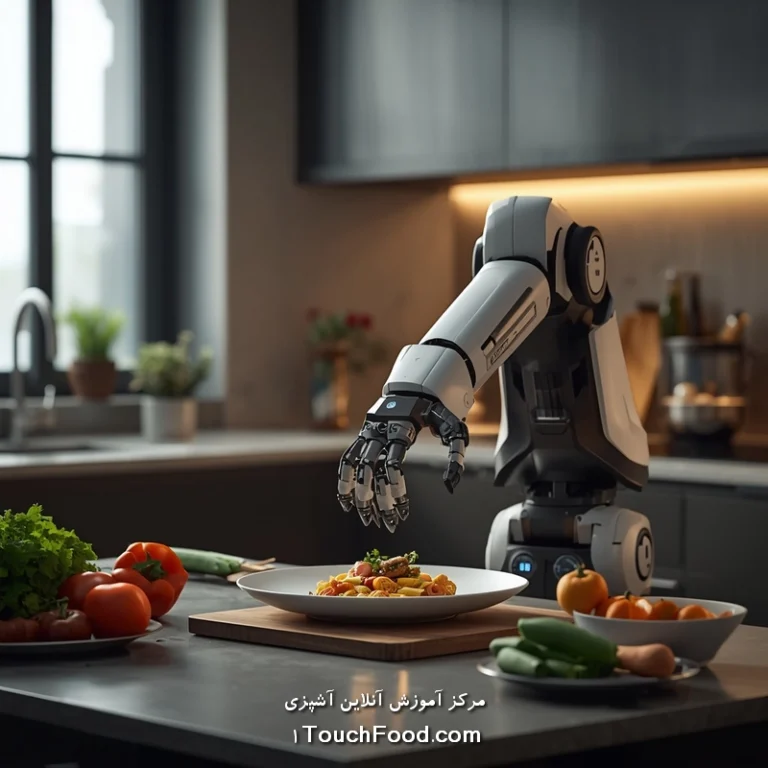
The future of kitchen voice assistants depends on a combination of conversational AI, connected appliances, and digital services. These assistants could make interacting with technology easier when cooking, because you don't have to take your hands off the work and reach for your phone to ask a question.
More natural voice interaction
One important development direction is better natural language understanding and continuous conversations. The user can ask questions while preparing food, request further explanation, or request a summary of previous information.
For example, when working with dough, you can ask voice questions about the difference between two methods. However, actual performance depends on language support, voice recognition quality, ambient noise, and device capabilities.
Coordination with smart kitchen appliances
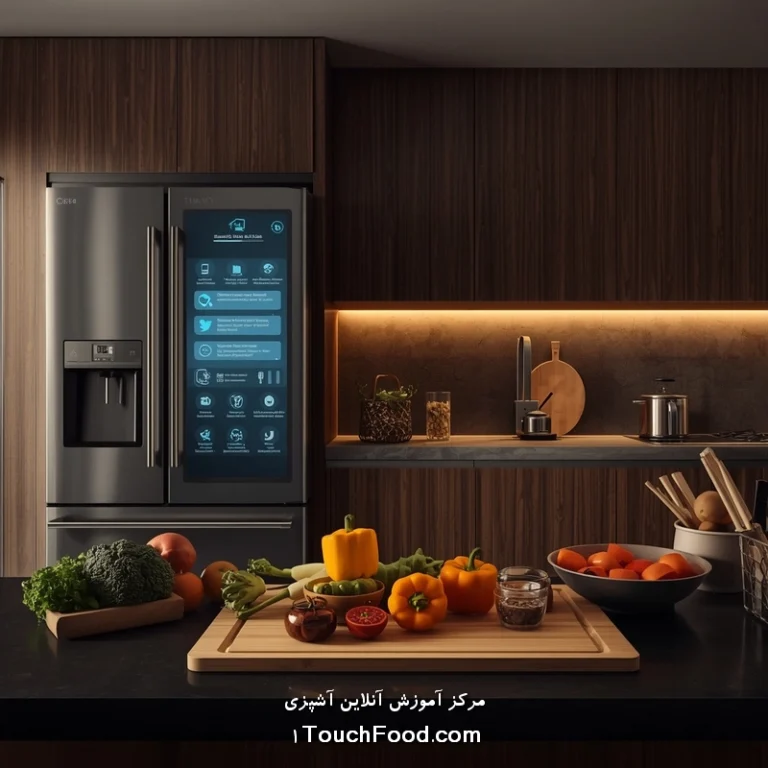
In the future, connecting smart assistants to some kitchen appliances could allow you to view the status of the appliance, set reminders, or better coordinate activities. The extent of these capabilities depends on the hardware, software, and compatibility between products.
However, connecting a device to the internet does not mean it is completely safe or has perfect control. Any functionality involving heat, electricity or cooking equipment should be used in accordance with the manufacturer's instructions and safety requirements.
More personalized shopping and meal planning
Future assistants might be able to view a user's list of available ingredients, food preferences, and weekly schedule side by side, with permission. Such a system could be useful for meal suggestions and shopping reminders.
The success of this feature depends on the quality of the input information and the timeliness of the data. If the refrigerator inventory is not recorded correctly or the store price has changed, the final offer may also be inaccurate.
Privacy and trust challenges
As kitchen assistants collect more information about everyday habits, data security becomes more important. Users need to know what information is being stored, who has access to it, and how they can change settings.
The successful future of this technology does not just depend on faster responses; transparency, user control, and the ability to review information also play an important role.
How to incorporate a cooking chatbot into your daily routine?
You don't need to buy a new appliance or completely change your cooking method to get started. You can use an existing general assistant and give it a few simple tasks to start with.
- Get meal ideas for using up leftovers.
- Ask about the meaning of cooking terms and techniques.
- Make a list of ingredients needed for weekly shopping.
- Investigate the possible cause of problems such as thickening of sauces or changes in the texture of food.
- Ask the assistant to explain the differences between the two cooking methods, along with the advantages and limitations of each.
- Match answers about food safety with credible sources.
After a while, you can evaluate whether the tool has really saved you time, money, or learning. If the answers are repeatedly incorrect or not consistent with your circumstances, change the way you ask the questions or try a different tool.
Frequently Asked Questions about Smart Cooking Chatbot
What does a smart cooking chatbot do?
The tool uses artificial intelligence to answer cooking questions, suggest substitute ingredients, and help with meal planning. Its exact capabilities depend on the service and active features.
Can a cooking chatbot replace in-person training?
Chatbots can explain concepts, techniques, and the causes of certain cooking errors, but they are not a complete substitute for hands-on practice and direct observation. Real-world experience is essential to learning skills like safe knife handling and heat control.
What is the best chatbot for learning to cook?
Choosing the best tool depends on your needs. ChatGPT, Gemini, and Claude can be useful for explaining techniques and answering cooking questions, but it's best to compare the quality of Persian responses, video capabilities, access to resources, and cost of each service.
Can a chatbot be used to determine whether food is safe?
No, you should not rely solely on chatbot responses or image analysis to determine the safety of food. It is essential to check storage conditions, expiration dates, and valid food safety guidelines.
Will kitchen voice assistants become more useful in the future?
The development of artificial intelligence and connected devices could make it easier to use voice commands, reminders, and meal planning. However, the extent of progress will depend on language support, device compatibility, privacy, and user accessibility.

Conclusion: Smart cooking, with more informed decisions
A smart cooking chatbot can be a useful companion in the kitchen; from finding new ideas with available ingredients to learning techniques and organizing a shopping list. The main advantage is that you can ask your questions in simple language and tailor the answer to your situation.
However, no digital assistant can replace experience, human judgment, and food safety principles. The best results are achieved when you let AI learn and generate ideas, but review sensitive and specialized information.
Now it's your turn! If you've used a smart assistant for cooking, share your experience with us. Would you like such a tool to help you choose food or teach you professional cooking techniques? Leave a comment so we can talk more about the future of smart cooking.
We have brought you the introduction of cooking radio again. We have reviewed the benefits, a guide to starting listening, and important points in choosing cooking radio programs. Don't forget the One Touch Food Instagram page . Be sure to send us your comments and suggestions. Don't forget that you can also use food calories to know the calories of other ingredients.
Prepared on: 1TouchFood cooking site