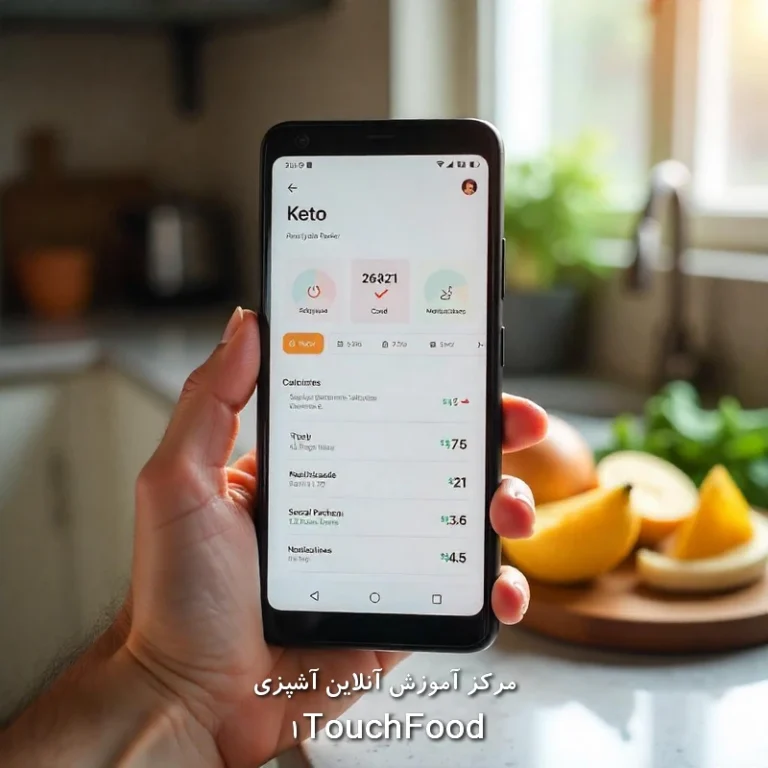
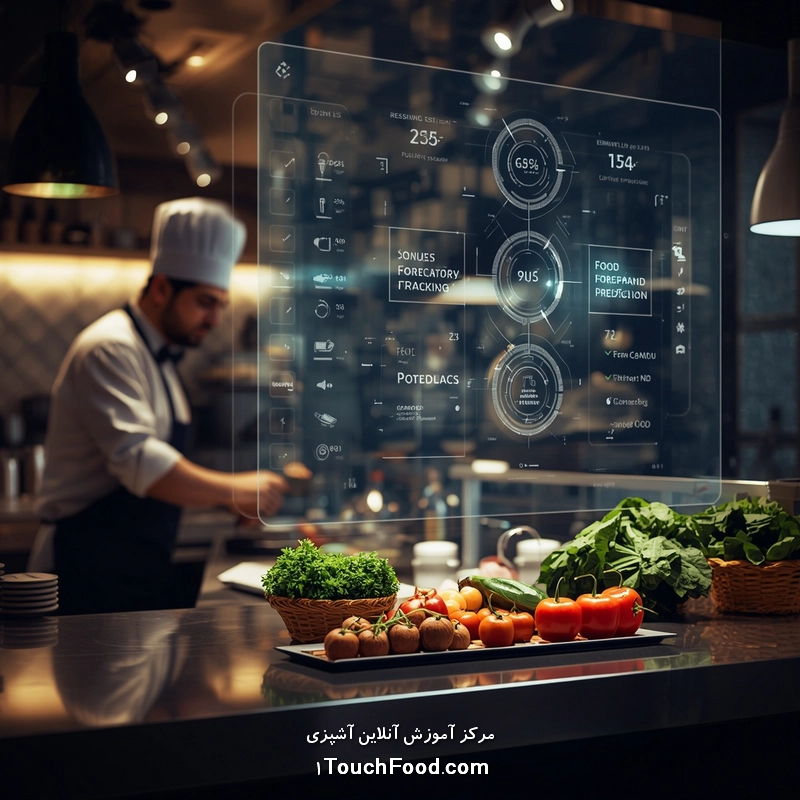
Artificial Intelligence in Restaurant Management
Artificial intelligence in restaurant management helps managers better predict orders, reduce raw material costs, control inventory more accurately, and create a better customer experience. This technology analyzes sales data, customer behavior, and kitchen performance to make decisions faster and more targeted. Of course, the real result is achieved when smart tools are combined with the manager's experience and the skills of the staff.
Imagine it’s late at night, the restaurant is closed, and you just realize that some of the ingredients are going to expire tomorrow, you’re out of stock on a few popular items, and today’s orders were higher than you expected. Frustrating, right? Now imagine having a system that helps you make more informed decisions for tomorrow by looking at past sales, busy times, inventory, and even changes in demand.
This is where AI can go from being a cool technology to a practical assistant for restaurant management; one that isn't meant to replace the chef or manager, but rather to help them spend their energy and time on more important tasks.
What is artificial intelligence in restaurant management and what are its uses?
Artificial intelligence in restaurant management refers to the use of software systems to analyze data, predict demand, automate tasks, and support management decisions. These systems can analyze information such as the number of orders, sales per dish, ingredient prices, peak hours, and waste levels, and make suggestions for improving performance.
For example, if a restaurant has had high sales of its specialty dish every Thursday for the past few months, a sales forecasting system can identify this pattern. With this information, the manager can prepare a more appropriate amount of ingredients and adjust the work schedule of the staff to meet the expected demand.
Of course, not all management software is AI. A simple store cash register might just record sales, while a sophisticated analytics system can use sales data to predict future demand.
How does artificial intelligence help restaurant managers?
The main applications of this technology can be divided into several groups:
- Sales forecast: Estimate the number of orders based on sales history, day of the week, season, and related factors.
- Inventory Management: Identifying the possibility of shortages or surpluses of raw materials and suggesting the appropriate time to reorder.
- Kitchen planning: Coordinate material preparation, equipment capacity, and order volume.
- Customer behavior analysis: Identify popular dishes, ordering patterns, and frequent feedback.
- Human resource optimization: Help estimate workload and adjust shifts to meet anticipated demand.
- Cost analysis: Identify unusual changes in raw material consumption or food preparation costs.
It is important to note that the output of these systems is a suggestion and prediction, not a definitive guarantee. If the input data is incomplete or business conditions change, the result may also not be accurate.
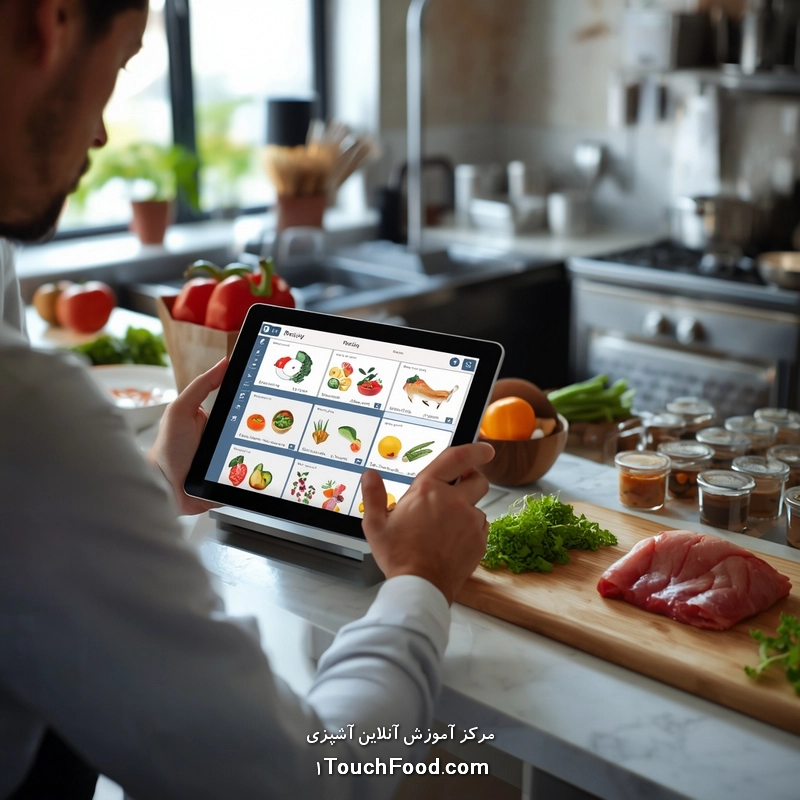
The most important benefits of artificial intelligence in restaurant management
Technology is valuable when it solves a real problem. Buying software just because it's new doesn't necessarily increase profits. It's better to see where the technology can make a tangible difference in your restaurant.
1. Reducing raw material costs and more accurate purchasing
Ingredients are one of the most important cost components in a restaurant. Buying more than you need increases the risk of spoilage and waste; buying less than you need can result in running out of popular dishes and customer dissatisfaction.
A demand forecasting system helps managers order more appropriate quantities of each ingredient by examining past sales and related conditions. For example, if sales of a seafood item are typically lower on weekdays, purchases of perishable ingredients can be adjusted more precisely.
To achieve better results, purchasing, actual consumption, inventory, and waste information should be recorded as regularly as possible. Without this information, even the most advanced software may provide inappropriate suggestions.
2. Reducing waste with smart planning
One of the important applications of technology in the kitchen is to reduce waste through smart planning. Food waste doesn't just mean throwing away food; it also wastes the cost of purchasing, storing, labor, and energy used to prepare it.
Suppose a restaurant prepares a certain amount of rice every day, but at the end of some days, a large portion of it is left over. By recording the amount of production, sales, and leftovers over a few weeks, the consumption pattern can be better understood. The analytical system can then suggest a more appropriate amount to prepare based on the forecasted demand.
To reduce waste, check this information regularly:
- The quantity purchased of each raw material.
- Actual consumption in food preparation.
- The amount of discarded material and its cause.
- The difference between forecasted sales and actual sales.
- Number of meals prepared and number of meals sold.
It is especially important to document the cause of waste. If food is being thrown away because of over-buying, the solution will be different than when the cause is over-preparation or improper storage.
Artificial intelligence can identify repetitive patterns, but compliance with food safety principles, temperature control, expiration dates, and proper storage methods is still the responsibility of management and employees.
3. Increase speed and order in the kitchen
During busy hours, coordination between ordering, preparation, cooking, and delivery is crucial. A smart system can analyze order information and help identify bottlenecks.
For example, a review of the data might show that most of the delays are related to the salad preparation department, not the cooking department. In such a situation, the manager can adjust the preparation time, the arrangement of ingredients, or the division of tasks.
This is especially important for restaurants that take in-person, phone, and online orders simultaneously.

4. Better understanding of customers and increasing sales
Customer behavior provides managers with valuable clues about menu performance. Sales analysis can show which dishes are selling well, which products are being chosen less often, and which combinations are appearing most often in customers' orders.
For example, if customers often order a particular main course with a specific drink, a restaurant can design a suitable combination offer. Such an offer is effective when it provides real value to the customer and its profit margin is also considered.
Analyzing comments posted on social media or online ordering systems can also help identify recurring problems; for example, delayed delivery, improper packaging, or fluctuating food quality.
Of course, customer information must be collected and used in compliance with privacy and legal restrictions.
5. Better staff and shift management
Shift scheduling is a critical decision for restaurant management. Understaffing during busy hours can reduce service quality, and overstaffing during off-peak hours can increase costs.
An analytical tool can examine the order entry pattern and estimate the likely workload for different times. The manager then adjusts the final schedule based on his experience, the skills of the employees, and the actual conditions.
The goal is not to leave all staffing decisions to algorithms. Adequate rest, fairness in shift distribution, individual skill, and unforeseen circumstances should still factor into the final decision.
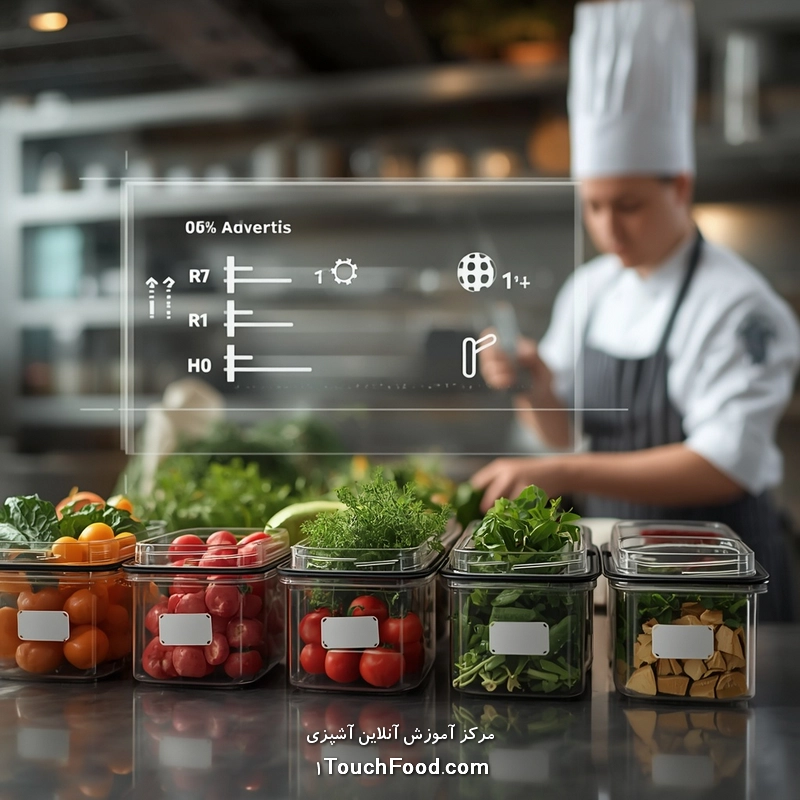
Weekly food management with artificial intelligence; from sales forecasting to purchasing raw materials
AI-powered weekly food management means using sales and inventory data to plan upcoming days’ menus, estimate ingredients, and coordinate kitchen operations. This approach allows the manager to draw on established business patterns rather than making decisions based solely on guesswork.
For example, consider a family restaurant that has mostly office customers Saturday through Wednesday, but sees families and larger groups on the weekend. The food production schedule for these two patterns should not be the same.
What information is needed for weekly planning?
Before choosing software or using AI tools, gather the following information:
1. Sales of each food item by day and hour.
2. The amount of ingredients used for each dish.
3. Current inventory and expiration dates of sensitive materials.
4. Purchase price of raw materials and its changes.
5. Number of canceled orders or unavailable foods.
6. Occasions, group bookings, and predictable changes in demand.
7. The amount of waste and its causes.
The more accurate this data is, the more useful the forecasts will be. If sales are lower one day due to a card reader failure, the system may mistakenly interpret it as a sign of a drop in demand. Therefore, checking the quality of the data is part of the intelligent management process.
Practical example of weekly planning
Suppose a restaurant has been tracking its sales for the past four weeks. The data shows that sales of a chicken dish are fairly constant on weekdays, but increase on Thursdays.
The manager can use this template to adjust purchasing, initial preparation, and work schedules. If a large group reservation is also registered for Thursday, this new information should also be included in the final estimate.
| Day | Suggested action | needed information |
|---|---|---|
| Saturday | Checking inventory and recording sales for the previous week | Inventory, sales and disposal |
| Sunday | Estimated demand for the coming days | Sales and bookings pattern |
| Monday | Arrange raw material orders | Inventory, supply time and expiration date |
| سه شنبه | Review of low-selling foods | Sales of each product and cost of production |
| Wednesday | Preparations tailored to Thursday's demand | Sales forecast and orders placed |
| Thursday | Monitoring consumption and preventing shortages | Instant orders and inventory |
| Friday | Weekly performance evaluation | Forecast error and costs |
This table is a sample template, not a fixed plan for all restaurants. A small café, takeout kitchen, and large restaurant will require different plans.
How to realistically determine the purchase amount?
Sales forecasts alone are not enough to determine the amount to purchase. The manager must also consider usable inventory, the amount of ingredients needed for each dish, potential waste, and supplier delivery times.
For example, if the projected sales of a food item are 100 presses and each press requires a certain amount of chicken, the initial requirement can be calculated. The amount of chicken available and usable is then subtracted from that to arrive at the new order quantity.
This calculation should also include materials reserved for firm orders and expiration dates. This simple method, along with intelligent forecasting, can prevent duplicate orders and over-purchasing.
What are the smart kitchen management tools?
Smart kitchen management tools are a collection of software and systems that help with order entry, inventory control, sales analysis, preparation planning, and performance monitoring. Not all of these tools are based on artificial intelligence, but the right combination of them can provide the basis for effective use of smart analytics.
1. Cash register and order management software
A point of sale (POS) system records information about orders, sales amounts, time of entry, and products selected. This information is the basis for sales analysis and demand forecasting.
When choosing a system, check whether sales reports can be obtained, whether it is possible to separate products, and whether the information can be transferred to other software.
2. Inventory and warehouse management system
These systems record the inflow and outflow of raw materials, usable inventory, and reorder times. Some advanced tools can use consumption data to make purchasing recommendations.
For restaurants with a lot of perishable items, the ability to record expiration dates, control inventory by category, and report waste is especially important.

3. Production order and food cost management system
These tools record the amount of materials required for each product and help calculate the cost of raw materials, control price changes, and compare estimated cost with actual consumption.
If the actual consumption differs greatly from the standard amount, the manager can investigate the possibility of measurement error, press size variation, abnormal waste, or incorrect inventory recording.
4. Analysis and forecasting tools
These tools generate reports or forecasts by examining historical data, trends, and related variables. Some software has this capability built-in, while others work through connections to sales and inventory systems.
Before purchasing, check what data the system receives, how it explains its predictions, and whether it is possible for the administrator to correct the results.
5. AI-based text assistants
AI assistants can help analyze reports, categorize customer feedback, set up task checklists, and develop an initial purchasing plan.
For example, a manager could provide an anonymous weekly sales report to the appropriate tool and want to identify the foods with the biggest sales declines. However, confidential business information or personal customer details should not be made available to public systems without reviewing the tool's security requirements and policies.

Comparison of restaurant management tools
| Tool type | Main application | Suitable for you |
|---|---|---|
| Sales and order box | Transaction recording and sales reporting | Almost all restaurants |
| Warehouse management | Inventory control and purchasing | Businesses with diverse raw materials |
| Food cost analysis | Reviewing procurement costs and profitability | Managers and chefs |
| Demand forecasting | Sales and raw material requirement estimation | Restaurants with sufficient data |
| Artificial Intelligence Assistant | Report analysis and decision-making assistance | Managers and operational teams |
The right choice depends on the size of the restaurant, budget, volume of orders, and the quality of the information available. Sometimes a simple system with accurate information is better than expensive software that employees don't use properly.
How to introduce artificial intelligence into restaurant management?
To use technology effectively, you don't have to change every single process in your restaurant from day one. Starting small, measuring results, and expanding gradually is usually a more manageable approach.
Step 1: Choose a specific problem
Instead of saying, “We want to make the restaurant smarter,” set a measurable goal, such as reducing vegetable waste, reducing the number of times a popular dish is out of stock, or improving the accuracy of sales forecasts.
Step 2: Record information systematically
If sales, purchases, and raw material consumption are recorded in scattered ledgers or incomplete files, they will be difficult to analyze. First, define a standard method for recording information and make sure that employees follow it correctly.
Step 3: Choose the tool that suits your needs
For a small restaurant, detailed cash register reports and a standard inventory file may be sufficient. A larger business will likely require multiple system connections and advanced analytics capabilities.
When choosing, consider subscription costs, training, support, data security, export capabilities, and compatibility with existing systems.
Step 4: Measure the result with specific indicators
Once you start using the tool, compare the results to a baseline period. If the goal is to reduce waste, examine the amount of materials discarded relative to the volume purchased or produced. If the goal is to improve sales forecasting, measure the difference between actual and forecasted sales.
For a fair assessment, also consider conditions such as price changes, occasions, and fluctuating customer numbers.
Step 5: Involve employees in the process
No software alone can solve the problems caused by poor communication or inaccurate data recording. Employees need to know why the data is being recorded, how to use the system's suggestions, and when to report the results to management.
Can artificial intelligence increase restaurant profits?
Yes, AI can help increase profitability by reducing forecasting errors, improving purchasing planning, identifying unusual costs, and helping to increase productivity. However, increased profits are not a surefire result of installing a software and depend on how it is implemented, the quality of the data, and the actual business conditions.
For example, reducing waste leads to greater profits when the cost of obtaining and storing materials is reduced, without losing customers due to food shortages or quality degradation.
When calculating financial results, don't just look at sales. The cost of software subscriptions, equipment, staff training, and the time required to enter data should also be factored into the assessment.
A practical approach is to first record measurable costs and then measure changes after a pilot implementation. If the financial and operational benefits outweigh the costs of implementing the system, it will make more sense to expand it.
Challenges and limitations of artificial intelligence in restaurant management
Despite its many advantages, this technology is not without limitations. Understanding potential pitfalls helps managers make more informed choices.
Low quality of information
If sales are incompletely recorded or inventory is not up-to-date, the system may miscalculate demand or purchase volume. It is essential to regularly record information, check for errors, and correct invalid data.
Startup and training costs
Some tools require monthly subscriptions, new equipment, or connections to other systems. Before purchasing, estimate the total cost of use over a specific period and compare it to the potential benefit.
Overreliance on prediction
Sales forecasts are always subject to some uncertainty. Rain, equipment breakdowns, price changes, sudden closures, or large orders can change the situation.
It is best for sensitive raw materials, large orders, and important financial decisions to still have human review as part of the process.
Security and privacy
Customer, employee, supplier, and sales information may be confidential. Restrict user access, use secure passwords for accounts, and review how information is stored and used before connecting devices.
Limitations in understanding the human condition
An algorithm may detect a drop in sales, but it doesn't necessarily know whether it was due to a change in food quality, poor staff behavior, or a local event. Data reveals the signs, and human experience helps interpret them correctly.
Will artificial intelligence replace the manager, chef or restaurant staff?
In many restaurants, AI is more of an auxiliary tool than a full replacement for human resources. The technology can simplify repetitive tasks like reporting, order analysis, and inventory estimation, but culinary skill, professional judgment, human connection, and managing unforeseen situations are still very important.
For example, the system might suggest reducing production of a poorly selling dish. The chef can decide whether to implement the suggestion based on the quality of the product, its position on the menu, customer feedback, and its role in promoting the restaurant.
The best results are achieved when technology makes analytical tasks easier and people have more time to focus on food quality and customer satisfaction.
The future of artificial intelligence in restaurant management
As analytical tools advance, applications such as more accurate demand forecasting, automated customer feedback analysis, order and inventory integration, and cost anomaly detection are expected to become available to more businesses.
However, the speed of adoption of this technology is not the same in all markets. The cost of the tools, the quality of the infrastructure, the availability of data, and the needs of each restaurant will influence their use.
For Iranian restaurants, it is important to pay attention to local conditions. Fluctuating raw material prices, different sales patterns on weekdays, seasonal changes, and supply constraints can make forecasting difficult. Therefore, a system that allows for capturing actual market conditions and quickly modifying plans is more valuable.
Instead of pursuing every new tool, it's better to choose technologies that solve a clear problem and have measurable results.
Frequently Asked Questions About Artificial Intelligence in Restaurant Management
Is using artificial intelligence useful for small restaurants?
Yes, even small restaurants can use simple sales analysis, inventory management, and purchasing planning tools. Starting with a specific problem and organized information usually makes more sense than buying multiple advanced software packages at once.
How does artificial intelligence reduce food waste?
This technology can analyze sales patterns, raw material consumption, and waste, and suggest more appropriate quantities to purchase or prepare. The outcome depends on the accuracy of the information, adherence to storage principles, and proper implementation of the recommendations.
What information do we need for weekly food management with AI?
Sales information for each food, inventory, raw material consumption, expiration date, purchase price, and recorded orders are important data. Regular recording of these items helps the system estimate the demand and potential need for raw materials more accurately.
What is the best AI tool for restaurant management?
One tool is not the best choice for all restaurants. It is better to use software that is tailored to the size of your business, budget, sales system, and operational needs, and that provides actionable reports.
Can artificial intelligence alone increase restaurant profits?
No, AI alone does not guarantee profitability. This technology helps the manager by improving analysis and planning, but the final result depends on the quality of execution, cost control, food quality and customer satisfaction.

Conclusion: Manage smarter, not more complex!
Artificial intelligence in restaurant management provides an opportunity for more accurate decision-making, better management of raw materials, and reduction of repetitive tasks. From sales forecasting to weekly menu planning and inventory control, the right tools can help managers get a clearer picture of restaurant performance.
But we’re not going to leave everything to software. Chef experience, customer knowledge, staff skills, and attention to food quality are still integral to a successful restaurant. The best approach is to pick a real problem, document it, and start with a simple tool. If the results are measurable and satisfactory, you can gradually add more features.
Now it's your turn! If you're a restaurant manager or work in the kitchen, we'd love to know which part of your business takes up the most time and money: purchasing ingredients, controlling inventory, planning menus, or managing orders? Share your experience in the comments section and share this article with colleagues who are interested in smart restaurant management.
We have brought you the introduction of cooking radio again. We have reviewed the benefits, a guide to starting listening, and important points in choosing cooking radio programs. Don't forget to check out One Touch Food's Instagram page . Be sure to send us your comments and suggestions.
Prepared on: 1TouchFood cooking site
Don't forget that you can also use food calories to find out the calories in other ingredients.