How to store cheese in the refrigerator
How you store cheese in the refrigerator has a direct impact on its freshness, flavor, texture, and shelf life. If your cheese is drying out too quickly, has a refrigerator smell, or is moldy, you probably haven't paid enough attention to its packaging or storage conditions. With a few simple changes, you can keep cheese fresher longer, avoid food waste, and enjoy the great taste of cheese every time you have breakfast.
Why is it important to store cheese properly in the refrigerator?
Cheese varies from one cheese to another in terms of moisture content, salt content, texture, and production method. White, fresh cheeses tend to have more moisture and tend to go bad faster, while hard, low-moisture cheeses often have a longer shelf life.
Improper temperatures, contact with contaminated hands or tools, improper packaging, and excess moisture remaining in the container can all speed up the cheese's spoilage process. On the other hand, exposing cheese to refrigerator air can dry out its surface and change its texture.
Proper storage doesn't just mean chilling the cheese. You also need to consider the right temperature, clean container, packaging appropriate for the type of cheese, and the time of consumption.
What is the best way to store cheese in the refrigerator?
The best way to store cheese in the refrigerator is to keep it at 4°C or below, place it in a clean, suitable container, and avoid direct contact with raw foods. Fresh and white cheeses should be stored in a sealed container according to the package directions; hard cheeses also need a covering to prevent them from drying out.
To get better results, follow these tips:
- Check the refrigerator temperature: A refrigerator thermometer helps make sure the temperature does not exceed 4 degrees Celsius.
- Place the cheese in a clean container: Food residue or dirty moisture inside the container can transmit contamination.
- Use appropriate packaging: Each type of cheese requires storage conditions appropriate to its moisture content and texture.
- Separate cheese from raw foods: Raw meat, poultry, and fish should not come into contact with cheese or its container.
- Check the expiration date: Take the date on the package and the manufacturer's instructions seriously, even if the cheese looks natural.
Where should we put cheese in the refrigerator?
The middle shelves of the refrigerator are usually a good choice for storing cheese, provided that their temperature is constant and no higher than 40 degrees Fahrenheit. A dairy drawer is also suitable if it is at a suitable temperature and the cheese is kept separate from contaminated foods.
The refrigerator door is usually not an ideal choice, as the temperature in this area changes more each time the door is opened and closed. Place fresh cheese in a section that is sufficiently cold and relatively constant.
Does the cheese have to be completely dry?
No. The right amount of moisture depends on the type of cheese. White brine cheese should be stored in the conditions recommended on the package, usually with its own brine. In contrast, hard cheeses do not require brine and should be protected from excess moisture.
If water has collected inside the white cheese container, do not replace it with plain water without checking the product's storage instructions. Plain water may alter the salt content and storage conditions of the cheese.
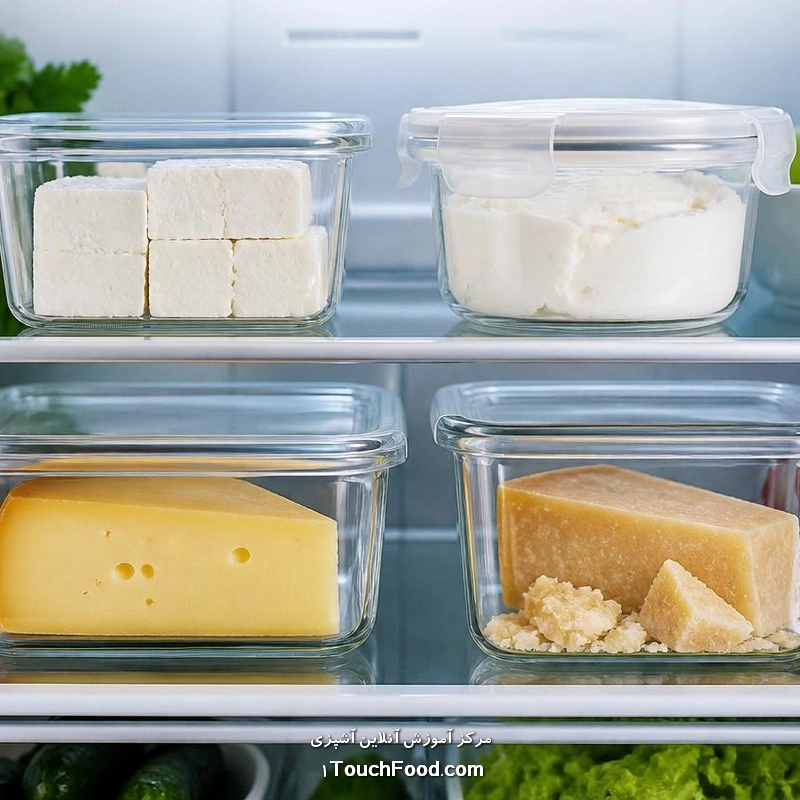
Proper packaging of cheeses
Proper packaging is one of the most important factors in preserving the quality of cheese. A good container should be clean, food-safe, and appropriate for the type of cheese. The packaging should not be so open that the cheese dries out, and it should not retain inappropriate moisture for long periods of time.
How to store white and breakfast cheese
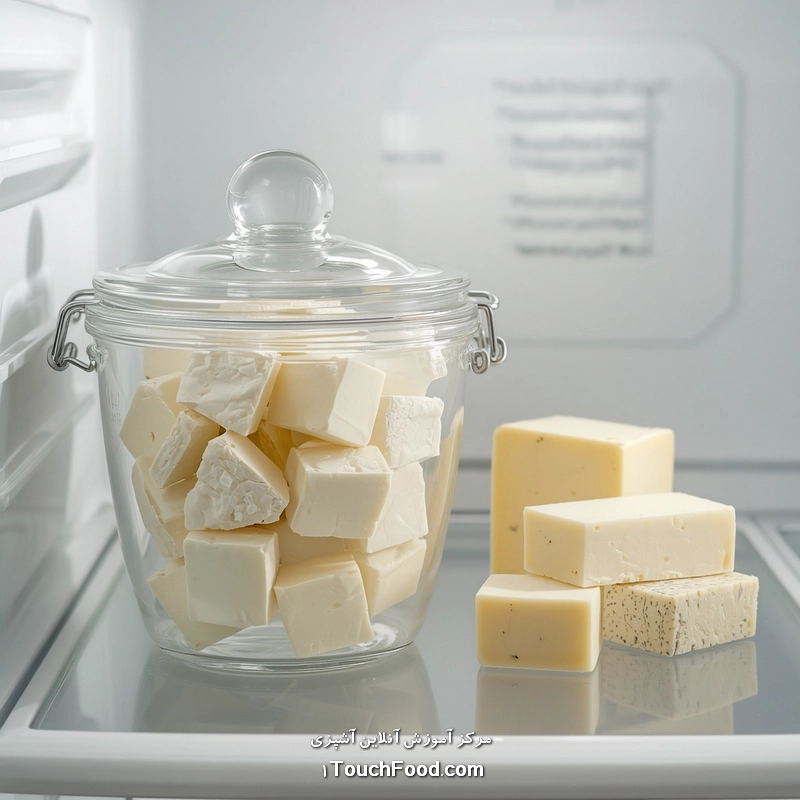
Iranian white cheese and breakfast cheeses tend to have a lot of moisture. If you remove these cheeses from the original packaging, place them in a clean, sealed container and follow the storage instructions on the package.
Useful tips for this type of cheese include:
- Use a clean knife or spoon to remove the cheese.
- Don't leave cheese on the breakfast table for too long.
- If the product must be stored in brine, use the appropriate and recommended brine.
- To store leftover cheese, close the container immediately after use.
For example, if you eat some cheese every morning, it's best to only put that amount in your breakfast bowl and keep the rest of the cheese in the original package or in a suitable storage container in the refrigerator.

How to store hard and semi-hard cheeses
Cheeses like cheddar, gouda, and parmesan have less moisture than many fresh cheeses. This usually helps them last longer, but prolonged exposure to air can dry out and harden the surface of the cheese.
You can use cheese paper or food-grade wax paper to store these cheeses, then place them in a sealed container. If you don't have such paper available, clean, food-grade packaging can also help.
It is best to store grated cheese in its original packaging and according to the manufacturer's instructions. After opening the package, close it tightly and prevent moisture or contamination.
How to store cream cheese and soft cheeses
Cream cheese and soft cheeses require extra care due to their high moisture content and delicate texture. Keep these products in their original, sealed containers and avoid dipping knives used for other foods into them.
If you're taking out cream cheese for breakfast or making sandwiches, remove the amount you need and return the rest to the refrigerator immediately. If the packaging is damaged or the cheese has been sitting at room temperature for an indefinite period, don't rely solely on its appearance to make a decision.
Can cheese be stored in a plastic bag?
A food-grade bag can be useful for short-term storage of some cheeses, but it's not the best choice for all types of cheese. Hard cheeses can lose moisture or unwanted moisture can build up around them if left in improper packaging for long periods of time.
If you use a bag, choose a food-grade type, remove as much excess air as possible, and be careful not to let water droplets form inside the bag. For fresh cheeses, a clean, sealed container is usually the easier choice.
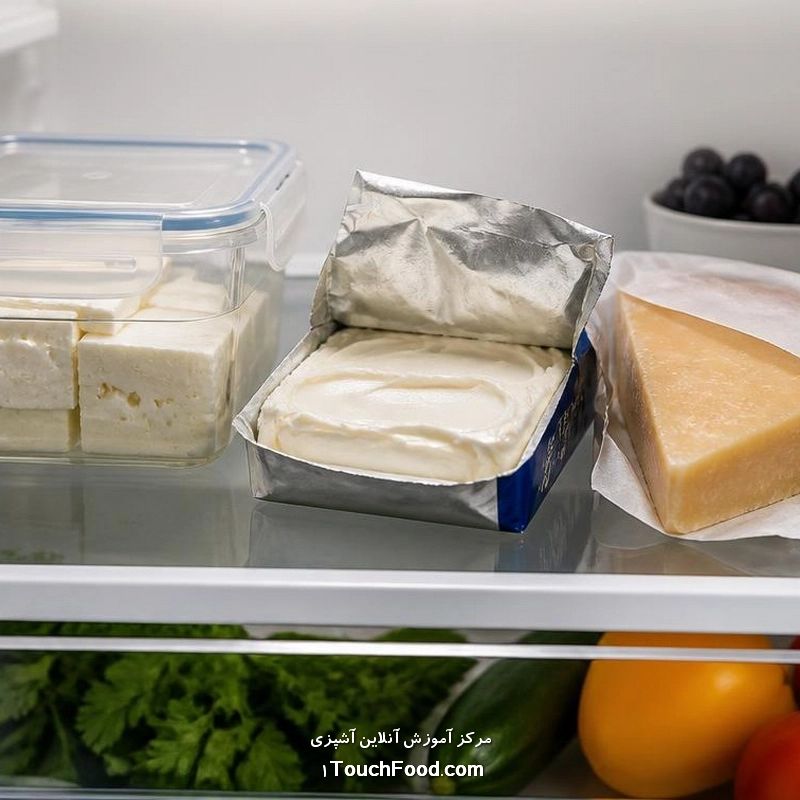
What are the effective ways to prevent cheese from going moldy?
To prevent cheese from going moldy, you need to keep the refrigerator temperature low, keep the packaging clean, and prevent contamination from getting into the cheese. Of course, no method provides an unlimited shelf life, and even healthy, packaged cheese can go moldy under the wrong conditions.
The most important factors that increase the likelihood of cheese going moldy are:
- Contact of cheese with dirty hands or a dirty knife
- Leaving cheese at room temperature for a long time
- Unwanted moisture entering the packaging
- Storing cheese in a container that has previously been contaminated with food
- Leaving a package of cheese open and letting it come into contact with other foods
What should we do if we see mold on cheese?
Deciding whether to use moldy cheese depends on the type of cheese. In soft, moist cheeses, such as cream cheese, fresh white cheese, and many shredded cheeses, mold may have spread beyond the visible part. So, if you see unwanted mold on these cheeses, throw away the entire product.
For very hard cheeses, food safety guidelines allow, in some circumstances, the moldy area, along with at least 2.5 cm (1 in) from the sides and bottom, to be removed with a clean knife, as long as the knife does not touch the moldy area. This recommendation does not apply to soft, semi-soft, or grated cheeses.
Some cheeses, such as blue cheeses, are produced using controlled molds. The specific, expected presence of mold in these products is not the same as the unwanted mold on regular cheese.
It is important to note that a natural smell or acceptable appearance does not guarantee that a suspect cheese is safe. Avoid tasting the cheese to test its safety.
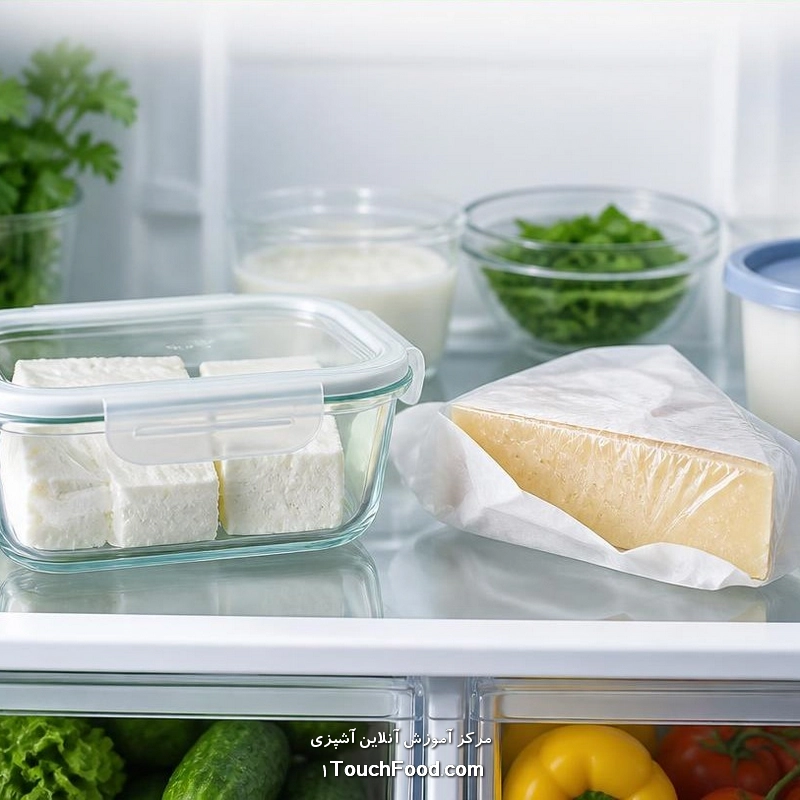
How long does fresh cheese last?
The shelf life of fresh cheese depends on the type of cheese, its moisture content, the method of production, whether the packaging is open or closed, and the storage temperature. For this reason, it is not possible to set a specific shelf life for all cheeses.
In general, fresh, moist cheeses tend to lose their quality sooner than hard cheeses. However, the expiration date on the package and the manufacturer's instructions, especially for opened products, should guide your decision.
| Type of cheese | Proper storage conditions | Important point |
|---|---|---|
| White cheese and breakfast | Sealed container and packaged according to instructions | Pay attention to saltwater conditions. |
| Cream cheese | Sealed original container and refrigerator | Refrigerate quickly after use. |
| Hard cheese like Parmesan | Protective packaging and refrigeration | Prevent the surface from drying out. |
| Grated cheese | Original package or suitable sealed container | Sensitive to expiration date and contamination |
| Soft cheeses | Clean container and cold refrigerator | Throw away in case of unwanted mold. |
This table is a general guide and does not replace the instructions on the package. Actual shelf life may vary depending on manufacturing method and storage conditions.
Does opened cheese spoil faster?
Yes, opening the package can increase the chance of contamination and exposure to air. For this reason, you should store the cheese in proper conditions after opening the package and check the instructions for use after opening.
If the package says that the product should be consumed within a few days of opening, follow that timeframe. The expiration date alone does not mean that the product will remain safe until that day under all conditions once opened.
Can cheese be frozen?
Some cheeses can be frozen, but freezing may change their texture. Hard cheeses and some grated cheeses are usually better suited for use in food after freezing than straight from the jar; while fresh and creamy cheeses may become watery or grainy after thawing.
If you plan to freeze, check the manufacturer's instructions first. Place the cheese in freezer-safe packaging, write the date it was frozen, and place it in the refrigerator to defrost. Do not refreeze defrosted cheese unless authorized by the product's instructions or food safety guide.
Common mistakes in storing cheese
Sometimes, even if you buy quality cheese, a few simple habits can cause it to spoil sooner than expected. If you want to get the best results from storing cheese in the refrigerator, avoid these mistakes:
- Leaving cheese on the table: Return cheese to the refrigerator immediately after use. For perishable foods, the general rule is not to leave it out at room temperature for more than 2 hours; in temperatures above 32°C, this time is reduced to one hour.
- Using a contaminated knife: Food particles and dirt can be transferred to the cheese.
- Arbitrary change of salt water: For cheeses that are stored in brine, follow the appropriate recipe for that product.
- Storage at inappropriate temperatures: It's not enough that the refrigerator appears cold; check the temperature with a thermometer.
- Ignoring the expiration date and conditions: A natural appearance is not always a sign of safety.
Frequently asked questions
1. Should we store cheese in the refrigerator with or without water?
This depends on the type of cheese. Store brined white cheese according to package directions and usually with the appropriate brine, but hard cheeses and cream cheeses do not need additional water.
2. How to prevent cheese from drying out in the refrigerator?
Cover the cheese with suitable food wrap and place in a sealed container. For hard cheeses, cheese paper or a suitable cover can prevent excessive contact with air.
3. How long does fresh cheese stay fresh after opening the package?
Shelf life depends on the type of cheese, production method, refrigerator temperature, and package instructions. Check the packaging for exact storage and use instructions after opening, and do not consume the cheese if there are any signs of spoilage.
4. Should we remove the mold from the cheese and eat the rest?
For soft, fresh, creamy, and grated cheeses, the presence of unwanted mold means throwing away the entire product. In some very hard cheeses, cutting off the moldy part with a large margin may be acceptable; however, this method is not suitable for soft cheeses.
5. What is the best refrigerator temperature for storing cheese?
The refrigerator temperature should be 4°C or lower. A constant, appropriate temperature helps slow the growth of many microbes, but it is not a substitute for observing the expiration date and hygienic packaging.

Conclusion
To keep cheese fresh for longer, you don't have to do anything complicated. Proper refrigerator temperature, clean packaging, using hygienic tools, and paying attention to the difference between fresh and hard cheeses are the most important storage principles. Also, take the expiration date and manufacturer's instructions seriously and don't consume moldy or questionable cheese simply because of its natural smell.
Now it's your turn! Do you store cheese in a sealed container or in its original packaging? Share your experience in the comments section so others can benefit from your practical tips.
We have brought you the introduction of cooking radio again. We have reviewed the benefits, a guide to starting listening, and important points in choosing cooking radio programs. Don't forget to check out One Touch Food's Instagram page . Be sure to send us your comments and suggestions.
Prepared on: 1TouchFood cooking site
Don't forget that you can also use food calories to find out the calories in other ingredients.