How to store homemade dried vegetables
How you store your home-dried herbs plays an important role in preserving the aroma, color, and quality of the herbs you have patiently dried at home. If you store your dried herbs in the wrong container or in a humid environment, they may lose their aroma very quickly or even develop mold. The good news is that with a few simple tips about choosing a container, controlling humidity, where to store them, and when to use them, you can keep your home-dried herbs in good condition for months.
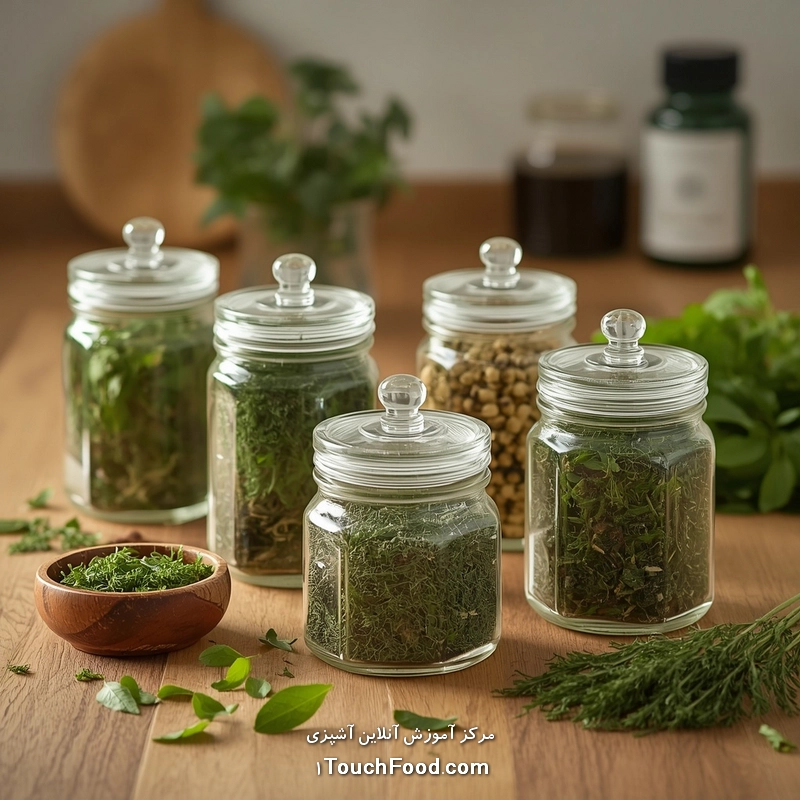
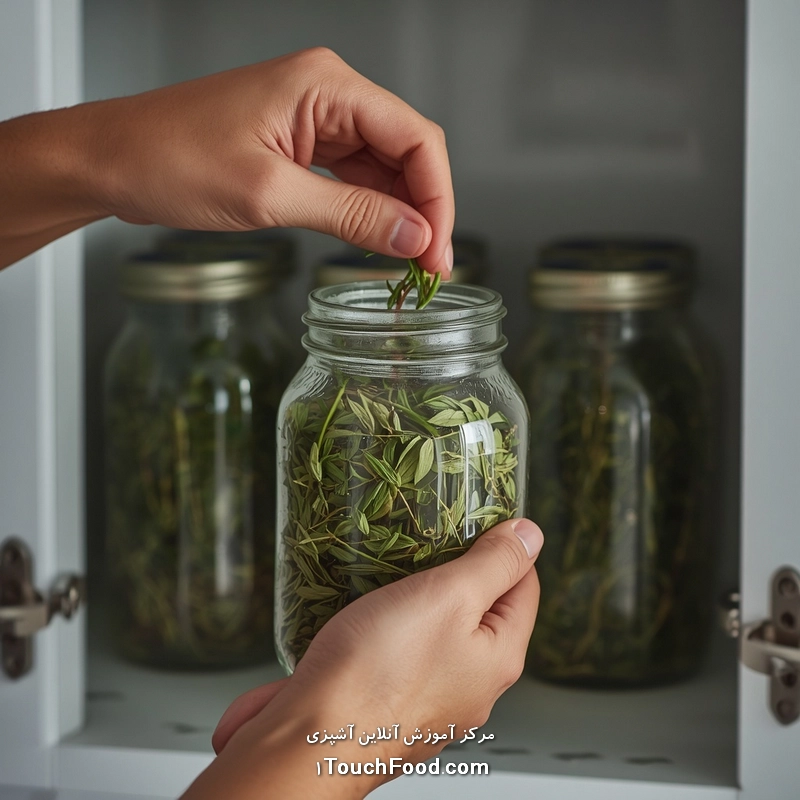
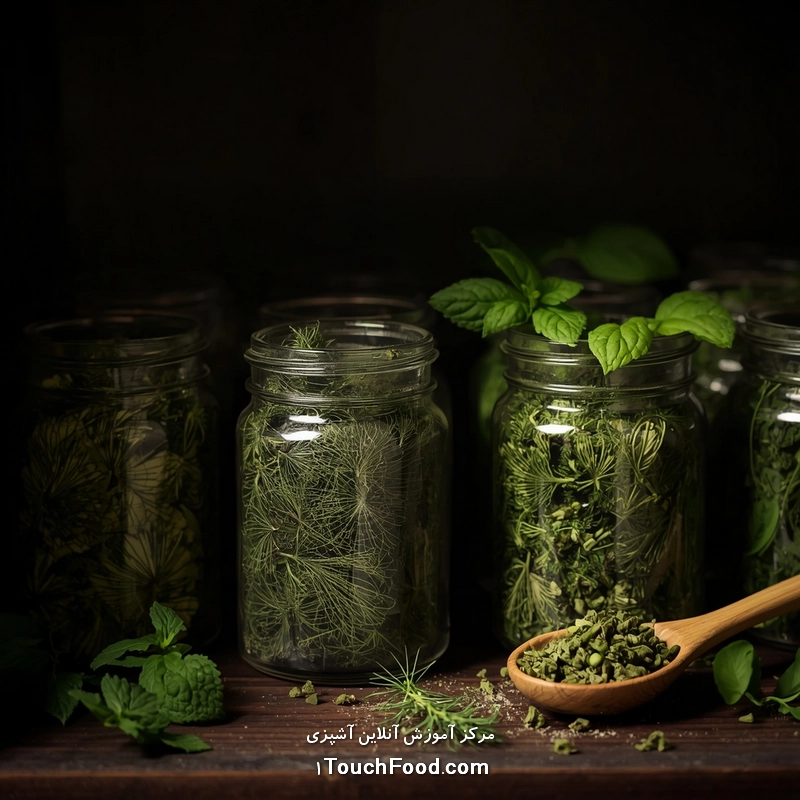
The best way to store homemade dried herbs is to place the completely dried and cooled herbs in a clean, dry, airtight container and keep them away from direct sunlight, heat, and moisture. A cool, dark cabinet is usually a good choice. It's also best to divide the dried herbs into small packages so you don't have to expose your entire stash to air and moisture each time you take a bit out.
Now let's see how we can store homemade dried herbs so that when cooking, they still have the same pleasant aroma as the first few days.
Why is it important to store dried vegetables properly?
Drying vegetables reduces the water content of their tissue and limits the growth conditions of many microorganisms. However, drying alone does not guarantee that the vegetable will remain healthy and fragrant forever.
Dried herbs can reabsorb water when exposed to ambient moisture. If this happens in conjunction with poor storage conditions, the likelihood of mold growth and quality loss increases. On the other hand, light, oxygen, and high heat will gradually degrade the aromatic compounds in the herb.
For example, if you keep dried mint near the stove, it may lose some of its fresh, spicy aroma in a short time. Dried basil can also lose its desired color and aroma if stored improperly.
Therefore, the goal of proper storage is not just to prevent vegetables from spoiling; it is to preserve the quality you have taken the time to achieve.
How to store homemade dried vegetables in a basic way
To make your dried herbs last longer, you need to pay attention to a few key factors. Each of these factors is important on its own, but the best results are achieved when you consider all of them together.
1. Make sure the vegetable is completely dry.
The most important thing when storing dried vegetables is to make sure they are completely dry. The vegetable may look dry and brittle on the outside, but parts of it may still have moisture.
If you place such a vegetable in a sealed container, the remaining moisture can accumulate in the closed space, creating ideal conditions for mold growth.
For a preliminary check, squeeze a few leaves or pieces of the green between your fingers. Well-dried leafy greens usually crumble easily and are not soft, wet, or leathery. Thicker stems may need more time to dry.
Of course, this home test alone does not accurately measure moisture content. If there is a noticeable difference in dryness in different parts of the vegetable, you should dry it completely before packaging.
2. Allow the vegetables to cool before packaging.
One common mistake is to immediately pour hot, dried herbs into a jar or sealed container.
If the vegetable is still warm, the temperature difference and conditions inside the container may contribute to the formation of moisture droplets. For this reason, after drying, you should allow the vegetable to come to room temperature before packaging it.
Keep the vegetable in a clean, dry environment during this time. Don't leave it exposed to the humid air of the kitchen for long periods of time, especially if the weather is humid.
3. Choose the right container
Suitable containers for dried vegetables should prevent moisture and air from entering as much as possible, while also being clean, dry, and washable.
Choosing the right container is one of the easiest ways to preserve the quality of dried vegetables. Of course, no container can protect vegetables from all environmental factors; storage location and drying quality are also very important.

4. Keep the vegetable away from light and heat.
Direct sunlight and high heat can reduce the color and aroma of herbs. For this reason, placing jars of dried herbs on a cabinet by the window or above the stove is not a good choice.
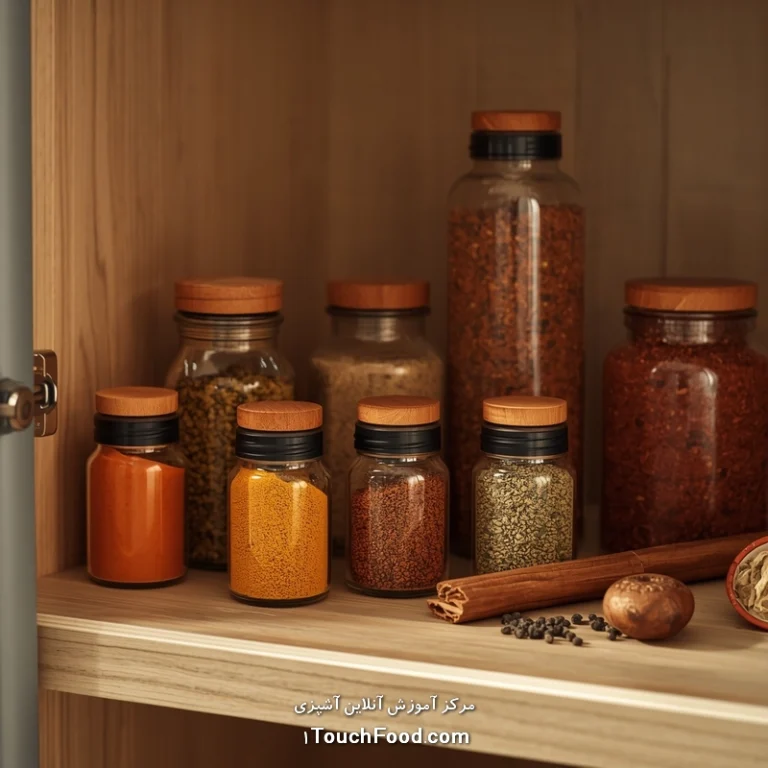
An interior cabinet, away from the oven, stove, samovar, and dishwasher, is usually a better environment. If your cabinet is near a heat source, it's best to consider another place to store your vegetables.
5. Avoid opening and closing the original container frequently.
Every time you open a container of dried herbs, some air and possibly moisture gets in. This is especially important in humid kitchens.
A simple solution is to store dried herbs in two parts: a small container for daily use and a larger container for primary storage. This way, the primary container will be opened less often and the quality of the herbs will be maintained for a longer period of time.
Preventing moisture from dried vegetables; the most important thing for longevity
Humidity is one of the most important factors threatening the quality of dried vegetables. Due to its structure, dried vegetables can absorb environmental moisture and become soft again if stored improperly.
To prevent moisture from drying out your vegetables, take these tips seriously:
- Pack the vegetable only after it is completely dry.
- Dry the container and lid completely before use.
- Do not place dried herbs next to the sink, kettle, samovar, or stove.
- Use a completely dry spoon when removing vegetables.
- Do not leave the container open for long periods of time on rainy days or in humid weather.
- Avoid transferring vegetables to a wet or washed container that has not yet dried.
Is it beneficial to put rice in a container of dried vegetables?
It is sometimes recommended to put a few grains of rice in a container of dried vegetables to absorb moisture. However, rice is not a substitute for proper drying and using a suitable container, and it cannot be relied upon as a reliable solution for controlling moisture.
If your herbs are properly dried and the container is tightly sealed, you don't need this trick. The most important thing is to prevent moisture from entering the container.
What should we do if we see water droplets inside the glass?
If you notice steam or water droplets on the container walls after packaging, don't ignore the situation. The presence of moisture is a sign that you should investigate the cause.
If the vegetable still shows no signs of spoilage, just looks dry, and you are sure of the time the problem occurred, remove it from the container and carefully inspect its condition. If you are sure that the vegetable is healthy, you can dry it again completely and place it in a clean, dry container after cooling.
But if you notice mold, an unusual odor, suspicious discoloration, or signs of spoilage, throw the vegetable away. Removing the moldy part or re-drying it is not a surefire way to make the product safe.
What are the appropriate containers for dried vegetables?
Choosing the right container depends on the amount of vegetables you have, how often you use them, and how much storage space you have. Below, we compare the most common options.
| Container type | Main advantage | Important point |
|---|---|---|
| Sealed glass | Properly prevents moisture from entering and preserves fragrance | Keep the jar away from direct light. |
| Sealed metal container | Good protection against light | The inside of the container must be clean and completely dry. |
| Plastic container for food | Stylish and practical | Use a healthy, food-safe type with a tight-fitting lid. |
| Food storage bag | Suitable for small quantity packaging | The level of protection depends on the material of the envelope and the quality of the seams. |
| Cloth bag | Air passage | Not a good choice for long-term storage in a humid environment. |
Is glass or plastic container better?
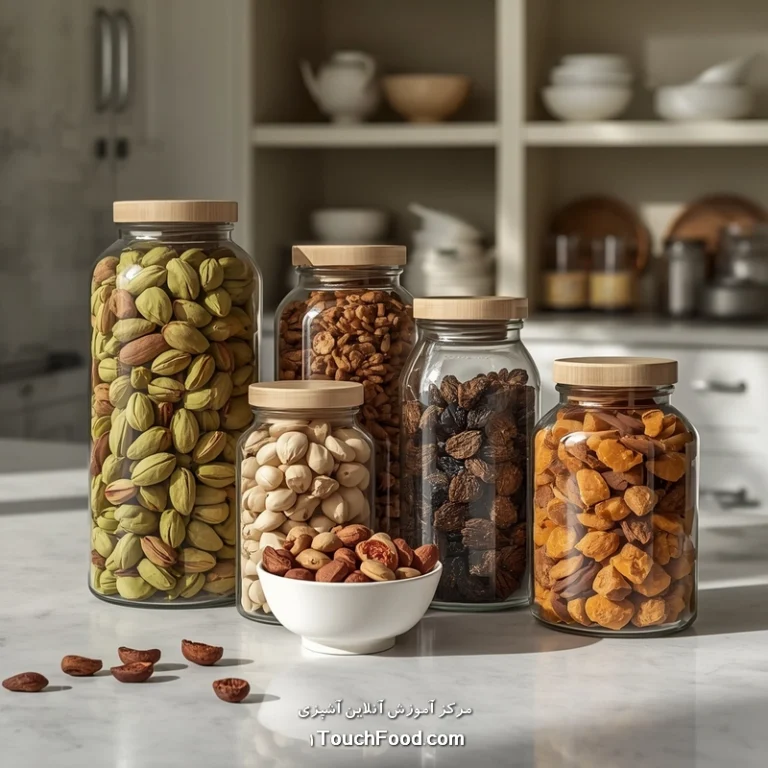
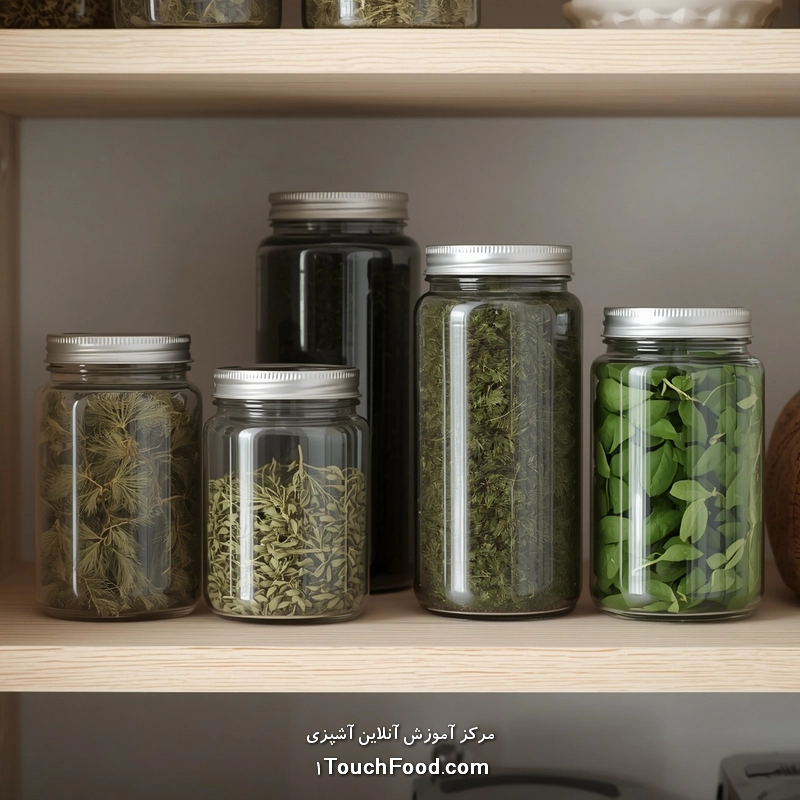
For home storage, a clean jar with a tight-fitting lid is a good choice. It doesn't absorb odors, is easy to wash, and you can see the contents.
However, clear glass doesn't provide much protection from light, so keep it in a cabinet or use a dark container.
A plastic food container can also be a good choice, as long as it is healthy, does not have an unpleasant odor, and the lid closes well.
Is it appropriate to store dried vegetables in a cloth bag?
A cloth bag is fine for some short-term uses or very dry environments, but it's not my first choice for long-term storage. Cloth usually doesn't block out moisture and odors.
If you want to store dried herbs for a few months, a sealed container is a safer choice.
How long does dried vegetables last?
The shelf life of dried vegetables depends on the type of vegetable, the degree of dryness, the quality of packaging, the ambient temperature, and the amount of exposure to air and light. For this reason, it is not possible to set a single expiration date for all vegetables.
For well-dried home-grown herbs stored in a sealed container in a cool, dark place, a practical guide to quality is 6 to 12 months. This is not a guarantee of safety or shelf life; some herbs will lose their flavor sooner, while others may retain their quality longer.
| Factor | Impact on durability |
|---|---|
| Complete drying | Reduces the possibility of spoilage caused by residual moisture. |
| Sealed container | Limits the vegetable's contact with air and moisture. |
| Cool and dark environment | Helps preserve color and aromatic compounds. |
| Opening the container frequently | Increases contact with air and humidity. |
| Standing next to the stove | It can accelerate the loss of aroma and quality. |
What is the difference in the shelf life of different vegetables?
Aromatic herbs like mint, basil, and dill may lose a significant amount of their aroma over time. Even if they are still usable, their aroma may not be as strong as it was in the early days.
In the case of mixed vegetables for soup or coco, the drying conditions of the various components are also important. If one part of the mixture has more moisture, the likelihood of a decline in the quality of the entire product increases.
It's best to write the name of the vegetable and the date it was packaged on the container. This way, you'll use up the oldest packages first and you won't have to guess when each jar was prepared.
Should we store dried vegetables in the refrigerator or freezer?
For regular home use, a cool, dry cabinet is often sufficient, provided the vegetable is completely dry and the container is tightly sealed.
The refrigerator is not always the best place to store dried herbs. If the container is opened frequently or if moisture forms on the contents or walls when transferred from a cold to a warm environment, the quality of the herbs will be affected.
The freezer can be suitable for longer storage of some dried herbs, but the packaging must be completely moisture-proof. It is best to pack the herbs in small packages so that you can only take out the amount you need at a time.
If you take a package out of the freezer, let it come to room temperature before opening. This reduces the chance of moisture forming from warm air coming into contact with the cold contents.
For everyday use, if you have enough cabinet space, you don't need to worry about complicated storage. A suitable container and the right place are enough in many homes.
How do we know if dried vegetables have gone bad?
Healthy dried herbs usually have the natural, familiar smell of the plant and should not smell sour, moldy, or unusually stale.
Before use, pay attention to these signs:
- Abnormal odor: A sour, damp, or moldy smell is a warning sign.
- Visible mold: Any mold growth means throwing away the contaminated contents.
- Texture change: Unusual softening or stickiness can indicate moisture absorption.
- Suspicious discoloration: Unusual spots or changes accompanied by an unpleasant odor should be taken seriously.
- Presence of insects: Do not consume the package and check the storage location.
The important thing to note is that the absence of a bad smell or visible mold does not guarantee that the product is safe. If the vegetable has been left in damp conditions for an indefinite period of time, it is best not to take any chances.
Dried herbs may also lose their aroma without being spoiled. In such cases, the main problem is loss of quality; however, if signs of spoilage are observed, it should not be assumed to be usable by re-drying or heating.
Common mistakes in storing homemade dried vegetables
Sometimes, despite a lot of effort to dry vegetables, a few simple mistakes prevent us from achieving the desired results.
Storage next to the stove
The heat and steam from cooking are not a good environment for long-term storage of dried herbs. It is best to move the jars to a cabinet away from the stove.
Using a wet spoon
Even a small amount of water that enters the container with the spoon can create localized moisture. Always use a completely dry spoon.

Filling the container before the vegetables cool down
Dried vegetables should be allowed to reach room temperature before packaging. Hasty packaging may increase the likelihood of moisture build-up.
Mixing fresh and old vegetables
Adding freshly dried herbs to a dish that is already being used makes it difficult to manage the expiration date. It is best to keep the new package separate and use it after the previous package is finished.
Label-free storage
If you have several types of dried vegetables, it can be difficult to tell when they were packaged after a while. Writing the name of the vegetable and the date of preparation on each container is a simple but very practical solution.
Professional tricks for preserving the aroma of dried herbs
If you want your homemade dried herbs to remain fragrant when cooked, make a few small tips a habit.
- Keep the vegetable as leaves or in large pieces as possible and chop it only when consuming.
- Choose small containers for daily use so that the main supply is less exposed to air.
- Pack each type of vegetable separately so that the different flavors don't mix.
- For quick identification, label the containers with the name of the vegetable and the date of packaging.
- Keep the container away from light, heat, steam, and foods with strong odors.
Here's another practical tip: If you're preparing dried herbs for a specific dish, put a few weeks' worth of them in a smaller container and leave the rest untouched. This is especially helpful for mint, dill, and basil, whose aroma plays a big role in the final quality of the dish.
Frequently Asked Questions About Storing Homemade Dried Vegetables
1. In what container should we store homemade dried vegetables?
A clean, completely dry jar with a tight-fitting lid is one of the best options for storing dried herbs. A metal or plastic food-grade container can also be used if it has a suitable lid. Place the container in a cool, dark place.
2. How long does homemade dried vegetables last?
Home-dried vegetables that are properly dried and packaged will usually have an acceptable shelf life of about 6 to 12 months. This period depends on the type of vegetable and storage conditions and does not guarantee that the product will remain safe or flavorful throughout this period.
3. How to prevent dried vegetables from getting moldy?
To prevent mold, dry the greens thoroughly, let them cool, and then store them in a clean, airtight container. Keep the container away from steam, moisture, and high heat, and use a dry spoon when removing the greens.
4. Can dried vegetables be stored in the freezer?
Yes, the freezer can be a good place to store dried herbs in moisture-proof packaging for longer periods of time. Place the herbs in small packages and allow them to come to room temperature before opening the cold package to reduce the chance of moisture forming.
5. If dried herbs lose their smell, can they still be used?
If the vegetable has only lost its aroma and shows no signs of mold, dampness, or spoilage, it may still be safe to eat; however, its flavor quality has decreased. If you notice an unusual odor, mold, or other suspicious signs, discard it.

Conclusion: Fragrant dried herbs with a few simple habits
Storing homemade dried herbs properly is not a complicated task. Just make sure the herbs are completely dry, put them in a suitable container after cooling, and keep them away from moisture, light, and heat. By following these simple tips, you can enjoy the aroma and flavor of your homemade herbs for longer and safely reach for them when cooking.
If you have an interesting experience with storing dried vegetables, we would be happy to share it with us and other cooking enthusiasts. Maybe your simple trick will solve the perennial problem of storing dried vegetables for someone else!
We have brought you the introduction of cooking radio again. We have reviewed the benefits, a guide to starting listening, and important points in choosing cooking radio programs. Don't forget to check out One Touch Food's Instagram page . Be sure to send us your comments and suggestions.
Prepared on: 1TouchFood cooking site
Don't forget that you can also use food calories to find out the calories in other ingredients.
Nutritional data source: FoodData Central – USDA